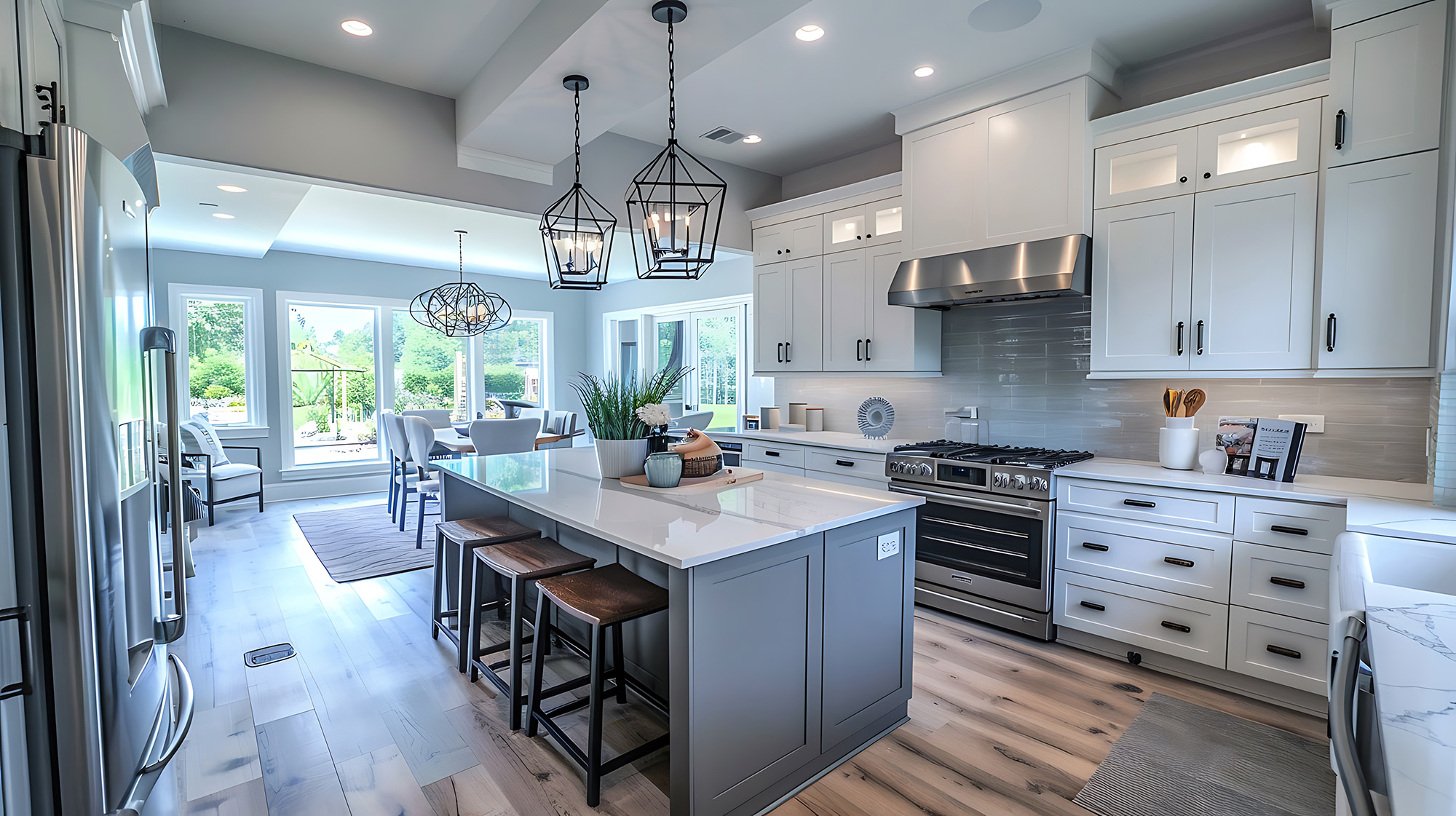
An ADHD-friendly kitchen is not about making the space look minimal for the sake of appearance. It is about reducing friction. When storage is hard to see, hard to reach, or hard to maintain, everyday tasks become more draining than they need to be. Good cabinet design can reduce that cognitive load.
For many households, the right storage upgrades improve meal prep, cleanup, inventory visibility, and overall comfort. The best solutions are not always the most expensive. They are the ones that make daily actions more intuitive, with fewer hidden zones, fewer stacked obstacles, and less visual or physical clutter.
Deep Drawers Usually Work Better Than Lower Cabinets With Shelves
One of the most effective upgrades in an ADHD-friendly kitchen is replacing lower cabinet shelves with deep drawers.
Traditional base cabinets often create a dark, hard-to-access cavity where items get stacked in layers and forgotten. Deep drawers improve visibility because contents can be seen from above. They also improve reach because users do not need to kneel and unload front items to get to the back.
Pot and pan drawers, dish drawers, and deep utility drawers can all support faster access and easier reset. For many kitchens, this single change has a bigger functional impact than decorative upgrades.
Vertical Storage Helps Reduce Visual Pileups
When items are stored horizontally in stacks, they tend to become unstable and hard to manage. Vertical storage is often more effective.
Tray dividers for baking sheets, cutting boards, lids, and serving platters keep items separated and visible. Vertical pan storage prevents nesting piles that create noise, frustration, and cabinet disorder. Narrow pull-outs beside ranges or refrigerators can also make oils, spices, or utensils easier to locate without consuming prime storage zones.
This kind of organization works because it reduces both searching time and reset difficulty. In practical terms, that means less clutter building up on countertops.
Pull-Out Systems Improve Access to Forgotten Spaces
Pull-out shelves and pull-out organizers can make problem cabinets far more usable.
Blind corner units, under-sink pull-outs, pantry roll-outs, and waste pull-outs help eliminate hidden dead zones. These upgrades are especially valuable when the household struggles with object permanence or loses track of what is stored behind other items. When cabinet contents come forward, they are easier to use consistently.
That said, not every pull-out is worth adding. The best ones are assigned to high-frequency tasks such as trash, recycling, everyday cookware, food storage containers, or cleaning supplies. The goal is to improve daily flow, not over-complicate the kitchen with hardware that adds cost but little benefit.
Zoning Matters More Than Most Buyers Realize
An ADHD-friendly kitchen works best when it is divided into clear functional zones.
That means dishes near the dishwasher, prep tools near prep space, spices near the cooking zone, breakfast items together, and cleaning supplies near the sink. Cabinets should support the sequence of tasks rather than forcing movement back and forth across the room.
This is where custom or semi-custom cabinetry becomes valuable. Storage can be designed around routines instead of forcing routines to adapt to generic cabinet layouts. A kitchen that supports task flow feels easier to use, even when the footprint is modest.
Visibility Is a Design Feature, Not Just an Organizational Preference
Many storage problems are actually visibility problems. If users cannot see what they own, they may overbuy, misplace items, or avoid using cabinets altogether.
Drawer inserts, shallow pantry shelves, interior lighting, and selective glass-front cabinets can help when used strategically. The key is balance. Too much open display can create visual noise, but too many hidden compartments can make the kitchen harder to manage.
The most effective approach is selective visibility. Everyday items should be easy to find. Rarely used items can live in less accessible zones.
Hardware and Motion Quality Affect Daily Comfort
An ADHD-friendly kitchen should also feel physically easy to use. That means choosing cabinet hardware and motion systems that reduce effort.
Soft-close drawer slides, smooth full-extension glides, quality hinges, and easy-grip hardware all contribute to usability. Full-extension drawers are especially important because they expose the entire drawer interior rather than hiding the back section.
Ergonomics matter too. The height of frequently used drawers, the reach to upper cabinets, and the placement of pull-outs all affect whether the storage system supports the household or adds friction.
The Best Upgrade Is Often Simplicity
The mistake many buyers make is assuming that more accessories automatically create a better kitchen. In reality, too many compartments or overly specific organizers can make storage harder to maintain.
The best ADHD-friendly kitchens usually rely on a few strong principles: easy visibility, fewer stacked layers, better zoning, smoother access, and enough flexibility to adjust as routines change. Cabinet storage should help the kitchen feel calmer, not more complicated.
If you want a kitchen that feels easier to use every day, BJ Floors and Kitchens can help you choose cabinet storage upgrades that improve access, visibility, and real-life workflow. Visit our showroom locations in Passaic, NJ and West Caldwell, NJ to explore cabinet layouts, storage accessories, and kitchen design options in person. We proudly serve Passaic, West Caldwell, Hackensack, Newark, and surrounding North Jersey communities. To start planning a more functional kitchen with buyer-ready guidance, contact us today.