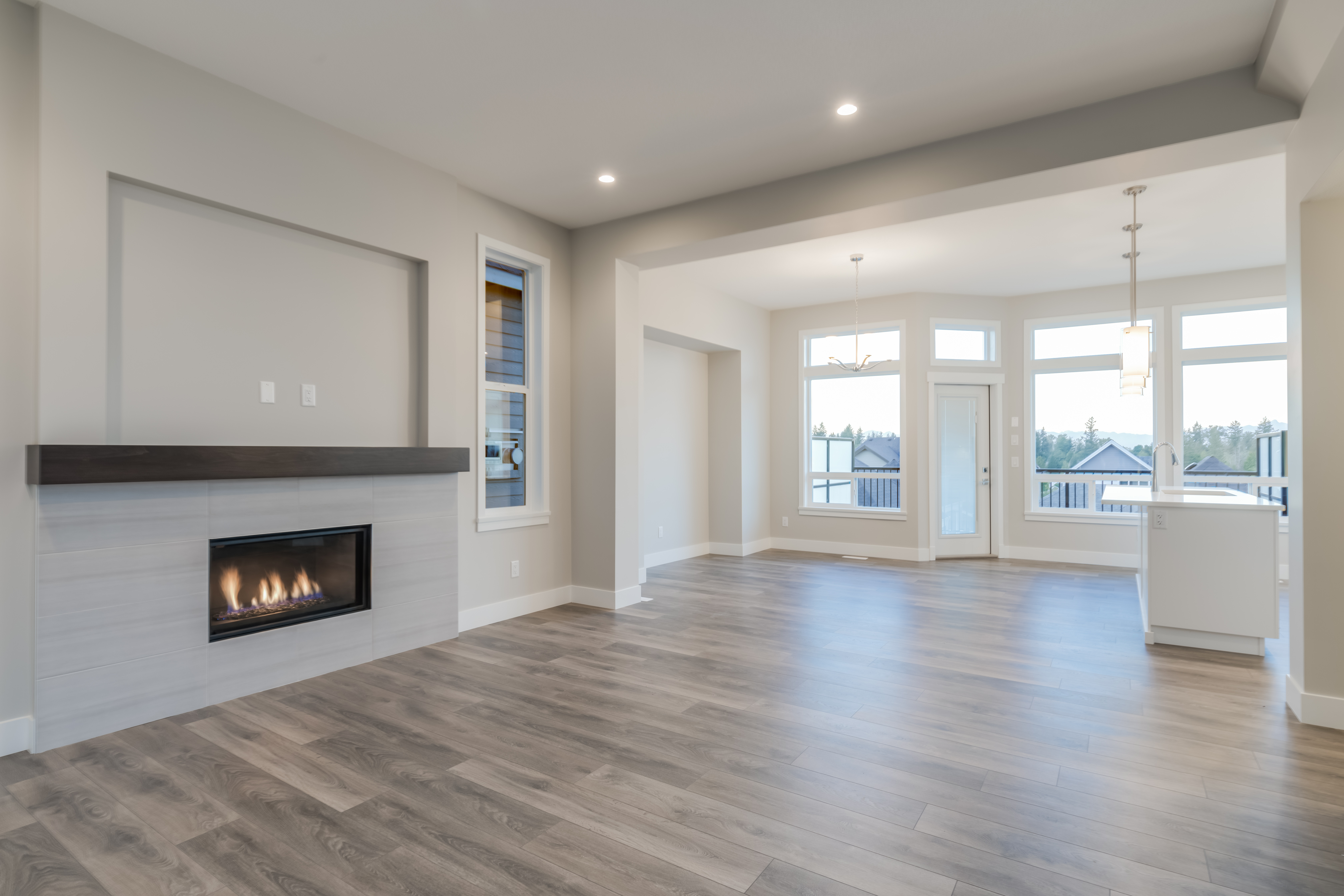
Luxury vinyl plank has earned its popularity. It is waterproof, budget friendly, and it can look remarkably close to real hardwood. But here is the part most homeowners learn the hard way. Not all LVP is built the same, and the cheap stuff that looks great on installation day often looks tired and dated within two years.
In North Jersey homes with heavy foot traffic, pets, kids, and big humidity swings between summer and winter, the gap between budget LVP and quality LVP shows up fast. Before you buy based on price per square foot alone, here are the three specs that actually decide how long your floor will look new.
The Wear Layer Is Where Cheap LVP Falls Apart
The wear layer is the clear protective coating on top of the plank, and it is measured in mils. Budget products often use a thin 6 mil to 8 mil layer, which scratches, scuffs, and dulls quickly under normal use. A quality residential floor should start at 12 mil, and high traffic zones like kitchens and entryways do best with a 20 mil layer.
This matters because you cannot refinish vinyl the way you sand and recoat hardwood. Once the wear layer abrades, the printed design film underneath starts to show damage, and at that point the only fix is replacement. Spending a little more on a thicker wear layer is the single best way to keep your floor looking fresh for a decade instead of a couple of seasons.
Core Construction Decides How It Feels and Holds Up
The core is the backbone of the plank, and it is where that hollow, plasticky feeling comes from. Cheap flexible glue down vinyl telegraphs every bump and dip in your subfloor, dents under furniture legs, and sounds cheap underfoot. A rigid core changes the experience completely.
For most North Jersey homes, especially anything at or below grade, a stone plastic composite core, known as SPC, is the smart choice. It is dense, dimensionally stable, and far more forgiving over slightly uneven subfloors and basement slabs. When you compare options, look for these markers of a quality plank:
A rigid SPC or WPC core rather than thin flexible vinyl
A total plank thickness of 5 mm or more
An attached IXPE or cork underlayment pad for sound and comfort
A solid feel and weight when you pick the plank up
Texture and Bevels Separate Real Floors From Obvious Fakes
The fastest way to spot cheap LVP is to look at how the texture lines up with the wood grain print. Quality planks use embossed in register texture, often shortened to EIR, where you can feel the grain exactly where you see it. Budget planks use a generic stamped texture that does not match the print, and your eye catches the fake instantly.
Finish and plank size finish the picture. High gloss reads cheap and shows every scuff and footprint, while a matte or low sheen surface looks far more natural and hides micro scratches. Wider and longer planks also create fewer seams across a room, which gives you that clean, continuous, high end look that narrow strips simply cannot match.
Specs tell part of the story, but nothing replaces standing on a floor and feeling it underfoot. At BJ Floors and Kitchens, our flooring specialists walk you through wear layers, cores, and textures in person, so you only pay for the performance your home actually needs. We proudly serve Passaic, West Caldwell, Hackensack, and Newark, NJ, and our team helps homeowners, landlords, and contractors choose floors built to last.
Ready to upgrade from builder grade to flooring that holds up for years? Contact us today to book a free design consultation, and let us help you pick the right LVP the first time.